AI and Language: A Powerful Tool, But No Substitute for Human Translation
- MEI
- Feb 24
- 4 min read
Updated: Feb 26
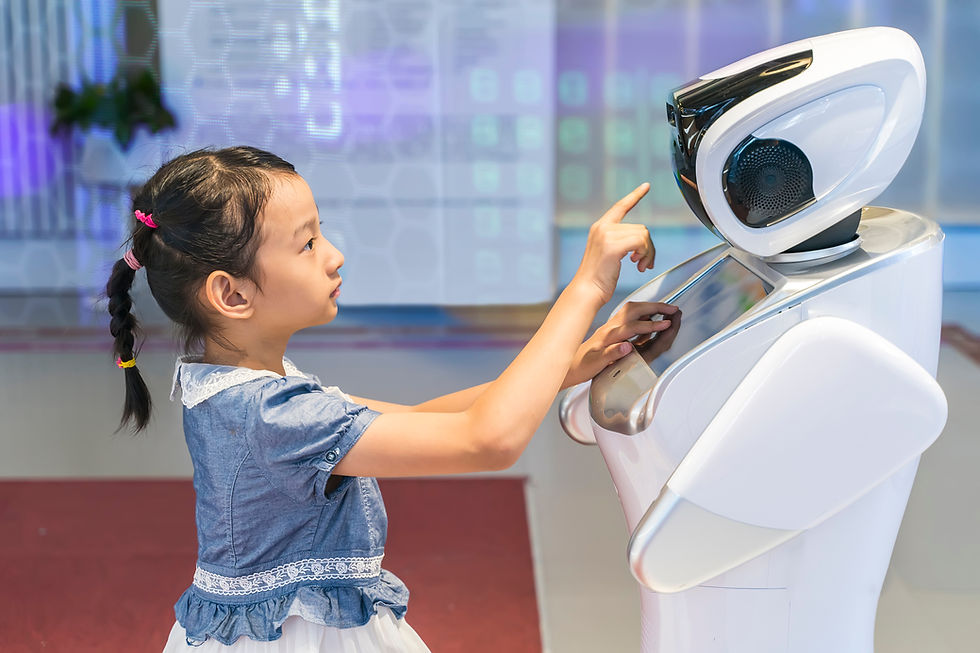
Artificial intelligence has become increasingly visible within the language services sector. Automated translation tools are now widely available and often used for basic, low-risk tasks such as rough comprehension or internal reference. However, their growing presence has also raised important questions about suitability, accuracy, and
the risks of applying machine-generated language in complex or high-stakes settings.
However, as AI adoption accelerates, an uncomfortable question is emerging across legal, healthcare, and public-sector services: is AI being trusted beyond its limits?
While AI is undoubtedly powerful, language is not purely technical, and that is where machine translation consistently falls short.
The risks of AI translation compared to Human translation
Modern AI translation systems rely on pattern recognition and probability. They analyse vast datasets and predict the most likely word or phrase to follow another. This works reasonably well for neutral, standardised text, but real-world communication is rarely neutral or standardised.
AI struggles most where language matters most:
Dialects and regional variations
Cultural nuance and social context
Emotion, tone, and intent
Ambiguity and incomplete speech
High-pressure, live interactions
Even leading AI developers acknowledge that machine translation accuracy drops significantly in complex or specialised contexts. Independent studies have shown error rates of 5–20% in legal and medical translations depending on language pair and complexity; a margin that may be acceptable in marketing copy, but not where decisions affect rights, safety, or health outcomes.
In short, AI can translate words. It cannot reliably translate meaning.
Why Human Interpreters Remain Essential in Legal Settings
In legal interpreting, precision is not optional. A single mistranslated term can affect:
immigration outcomes
asylum claims
criminal proceedings
safeguarding decisions
Human interpreters do more than convert language. They actively manage:
register (formal vs informal speech)
culturally sensitive phrasing
legal terminology consistency
real-time clarification when meaning is unclear
AI cannot pause a hearing to seek clarification. It cannot flag confusion, emotional distress, or misunderstanding. Crucially, it cannot be held accountable.
When legal interpreting goes wrong, the consequences are borne by real people, not software.
Healthcare Interpreting: Where Language Meets Human Life
Healthcare communication is deeply human. Patients rarely speak in neat sentences. They hesitate, contradict themselves, use idioms, or express pain emotionally rather than clinically.
AI systems are particularly weak in this environment. They struggle with:
symptom description across cultures
emotionally charged speech
safeguarding disclosures
mental health contexts
non-standard grammar or speech patterns
Healthcare interpreting is not simply about accuracy, it is about trust. Patients are more likely to disclose sensitive information when they feel understood by another human being. No algorithm can replicate that relational dynamic.
In healthcare, misunderstandings are not just inconvenient, they can be dangerous.
Dialects, Availability, and Cultural Competence
One of the most overlooked weaknesses of AI translation lies in dialect and regional variation. Languages such as Arabic, Kurdish, Somali, Pashto, and Amharic are not single, uniform systems. They exist as families of dialects shaped by geography, history, and culture. In practice, two speakers of the same “language” may struggle to fully understand one another if their dialects differ significantly.
Human interpreters recognise these distinctions immediately. They can identify when communication is breaking down, adjust their approach, or flag the issue before it causes confusion. AI systems, by contrast, tend to default to standardised or widely taught forms of a language, which may not reflect how people actually speak in real-life settings. This can result in translations that are technically correct but practically ineffective.
The consequences of this gap are most visible in legal, healthcare, and community interpreting. In a medical appointment, misunderstanding symptoms due to dialect differences can lead to incorrect treatment. In legal or immigration contexts, a mistranslated phrase or culturally misunderstood response may affect credibility, decisions, or outcomes. According to industry studies, language and cultural misunderstandings are among the leading contributors to miscommunication in healthcare settings, particularly where rare languages are involved.
Cultural competence also extends beyond vocabulary. Human interpreters understand tone, formality, social norms, and when indirect language carries more meaning than direct translation. They recognise hesitation, emotional cues, and culturally specific expressions that AI systems often miss or misinterpret.
Availability further complicates matters. While AI tools are always “on,” they cannot assess whether they are the right tool for a specific speaker, dialect, or situation. A trained interpreter can. They know when to proceed, when to clarify, and when to recommend a different linguistic match altogether.
In high-stakes environments, accurate communication is not just about words. It is about understanding people, something that remains firmly human.
Where AI Does Add Value
None of this is to say AI has no place in language services. Used correctly, it can enhance human-led work.
Professional interpreters and translators increasingly use AI to:
prepare terminology lists
research subject matter in advance
Look up a certain word
improve turnaround times on low-risk content
When AI is used as a support tool, guided and reviewed by trained professionals, it can improve efficiency without compromising quality.
The problem arises when AI is treated as a replacement rather than an assistant.
The Risk of Over-Reliance
As AI tools become more convincing, the risk is not poor translation, it is misplaced confidence. Machine-generated output often sounds fluent even when it is wrong. This creates a false sense of reliability, particularly for monolingual decision-makers.
In high-stakes environments, fluency without understanding is a serious liability.
Language Is Human by Nature
Language is shaped by lived experience, culture, trauma, humour, power, and emotion. These are not data points; they are human realities.
AI is likely to continue to evolve, and its role in language services to gradually grow. But interpreting and translation, particularly in legal and healthcare contexts, demand judgment, accountability, connection and empathy; qualities that remain firmly human.
The future of language services is not about choosing between AI and people. It is about recognising where technology supports communication, and where human expertise is irreplaceable.
Clear communication still begins, and ends, with people.